If your AC isn't cooling, check these in order: thermostat settings, air filter, circuit breaker, outdoor unit, drain line, vents, and coils. About 50% of "broken AC" calls in Florida are caused by these simple issues — fixable in under 10 minutes without a technician.
Your AC just stopped cooling. It's 92°F outside, your house is climbing toward 80°F inside, and you're already dreading the bill from the first HVAC company you Google.
Take a breath. Before you call anyone, run through this checklist. As an HVAC technician serving South Florida for over 10 years, I can tell you that roughly half of all "my AC isn't working" calls end up being something the homeowner could have fixed in 10 minutes — once they knew what to look for.
1. Check Your Thermostat First (Don't Laugh)
Yes, this sounds obvious. But you'd be amazed how often the issue is just a thermostat setting.
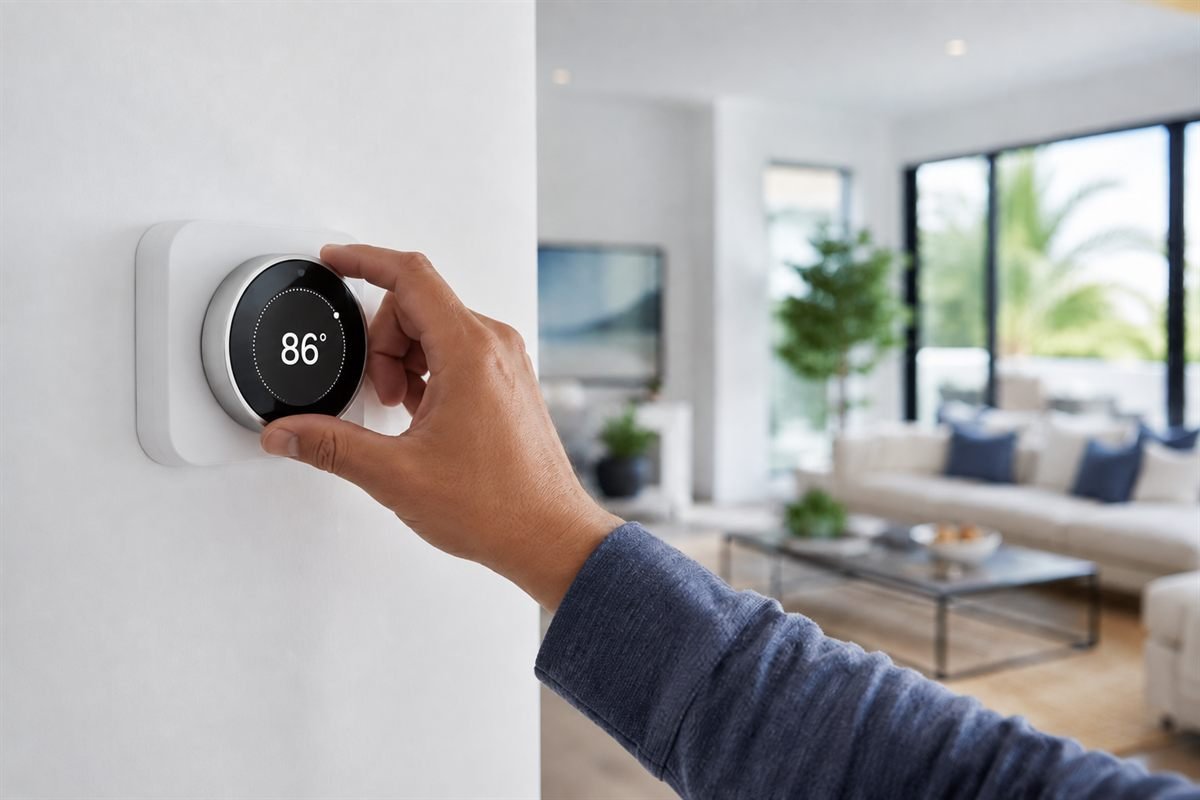
- Is it set to "Cool"? Sometimes kids or guests bump it to "Off" or "Heat."
- Is the temperature setting actually below the room temp? Set it to 68°F to make sure it's calling for cool air.
- Is the fan set to "Auto" or "On"? If "On," the fan runs constantly even when not cooling — making you think it's broken.
- Are the batteries dead? If your thermostat's screen is blank or dim, replace the batteries.
If the thermostat seems fine but isn't responding, try resetting it. Most digital thermostats have a small reset button or you can briefly remove the batteries.
2. Inspect Your Air Filter
This is the #1 cause of AC issues in Florida — and the cheapest fix.
A clogged air filter restricts airflow, causing your AC to work harder, freeze up, or simply blow warm air. In Florida's high-pollen, high-humidity environment, filters get dirty fast.
How to check: Pull out your filter (usually located in the return air vent, behind the air handler in your closet/garage, or in a wall vent). Hold it up to the light. If you can't see light through it, it's clogged.
How often to change it: Every 30-60 days in Florida — even if the package says 90 days. Pets, allergies, or open windows? Every 30 days. Here's our full Florida maintenance schedule.
3. Reset the Circuit Breaker
Both your indoor air handler and outdoor condenser have their own breakers. A power surge — common during Florida storms — can trip them.
- Find your electrical panel.
- Look for breakers labeled "AC," "HVAC," "Condenser," or "Air Handler."
- If any are tripped (in the middle position or "Off"), flip them firmly to "Off" first, then back to "On."
- Wait 5 minutes before turning the AC back on at the thermostat (this protects the compressor).
If a breaker keeps tripping, stop and call us. That's a sign of an electrical issue that could damage your system or be a fire risk.
4. Look at the Outdoor Unit
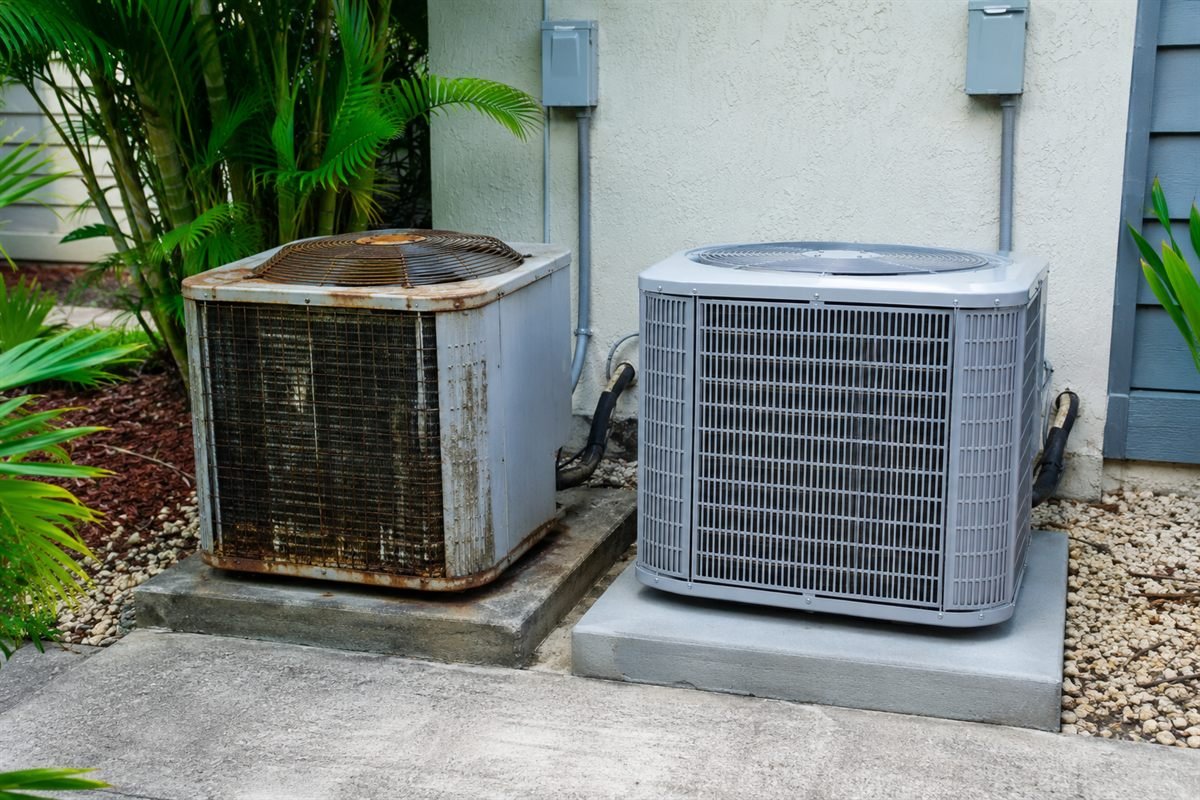
Your outdoor unit (the condenser) is exposed to weather, debris, and Florida's relentless humidity. Take 30 seconds to inspect it:
- Is the fan spinning? Walk outside and listen. If you hear a hum but the fan isn't spinning, it could be a stuck fan or bad capacitor — call a tech.
- Is it surrounded by debris? Leaves, grass clippings, vines, lawn furniture — any of these blocking airflow will cause cooling issues. Clear at least 2 feet around the unit.
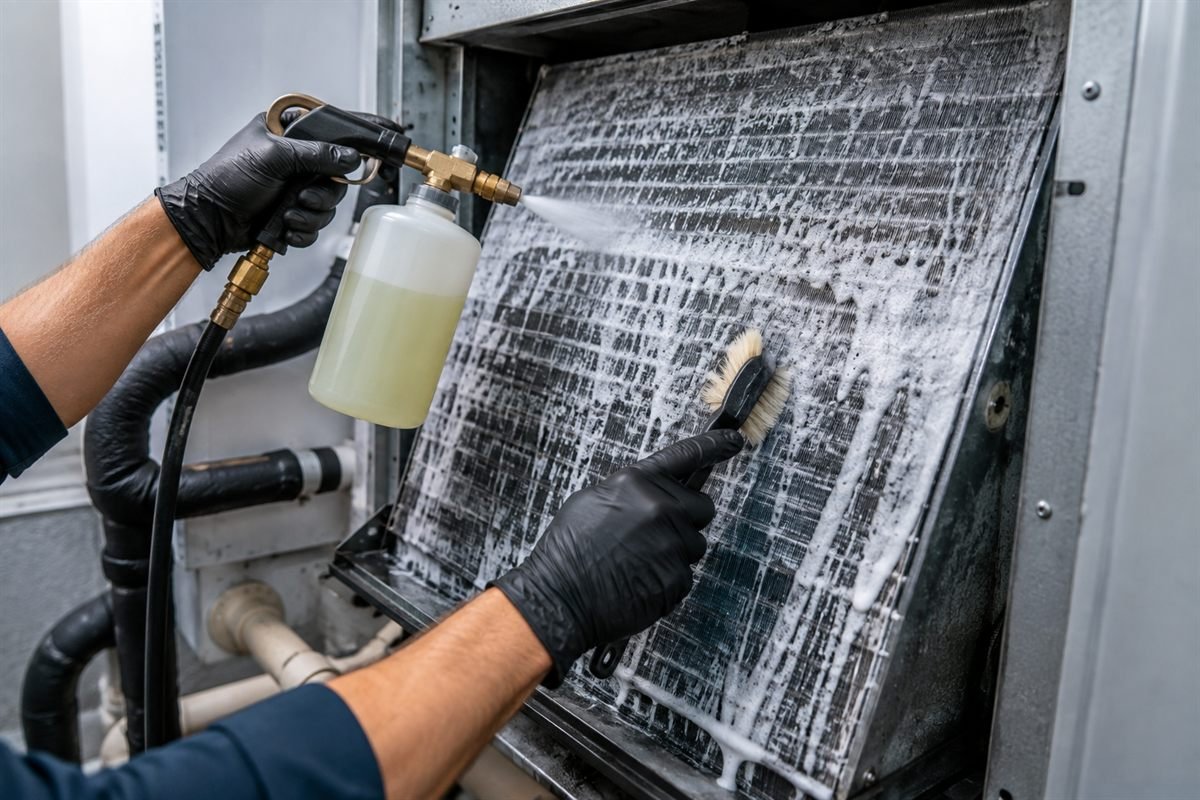
- Are the coils visibly dirty? If the coils look caked with dirt, they need professional cleaning. Don't try to power-wash them yourself — you'll bend the fins.
5. Check the Drain Line (Especially in Florida)
This is the one most homeowners don't know about — and it's huge in Florida's humidity.
Your AC produces a LOT of condensation, which drains out through a small PVC pipe. In humid climates, this drain line clogs with algae and gunk. When it clogs, your AC has a built-in safety switch that shuts the system off to prevent water damage.
How to check: Find your indoor air handler. Look for a PVC pipe nearby (often capped with a small T-fitting). If you see standing water in the secondary drain pan under the unit, your line is clogged.
Quick fix: Pour 1 cup of distilled white vinegar (NOT bleach — it damages the line over time) into the access port. Wait 30 minutes. If you have a wet/dry vacuum, suction the outdoor end of the drain line. Then flip your AC back on.
6. Check Your Vents and Registers
Walk through your house and check that:
- All supply vents (where cool air comes out) are open and not blocked by furniture, curtains, or rugs.
- Return vents (usually one big vent in a hallway or wall) are clear and unobstructed.
- No vents are closed in unused rooms (this actually increases stress on your system, contrary to popular belief).
7. Look for Ice on the Coils
If your AC is blowing warm air or running constantly without cooling, check for ice. A frozen system is one of the most common reasons an AC stops cooling in Florida.
Look at the copper refrigerant lines connecting your indoor and outdoor units. If they're covered in frost or ice, your system is frozen. Causes:
- Dirty filter (we already covered this)
- Low refrigerant (needs a tech)
- Dirty evaporator coil (needs a tech)
- Blocked airflow (closed vents, blocked returns)
Immediate fix: Turn the AC off at the thermostat. Set the fan to "On" only (not Auto). Let it run for 1-2 hours to thaw the ice. Then turn cooling back on. If it freezes again within 24 hours, call a tech — there's an underlying issue.
Tried everything and still no cool air?
If you've worked through this list and your AC still isn't cooling, it's time to call a professional. We respond same-day across South Florida — and our service call is FREE when you book a repair.
Call (754) 308-9831Same-day AC service for homes and businesses across Broward and Miami-Dade — Weston, Davie, Plantation, Pembroke Pines, Fort Lauderdale, Hollywood, Coral Springs, Miami and Boca Raton, Doral, Kendall, Sunrise, Pompano Beach.
When to Stop and Call a Pro
Some things shouldn't be DIY. Call a licensed HVAC technician immediately if:
- The breaker keeps tripping after you reset it
- You see or smell smoke, burning, or chemical odors
- Your AC ices up again right after thawing
- You hear loud banging, screeching, or grinding noises (we have a guide for that)
- There's water leaking inside your home
- The compressor is humming but not running
And if you're in South Florida and want a free, honest diagnosis from someone who picks up the phone — that's us. Call (754) 308-9831 anytime, day or night.
Bottom Line
Most "broken AC" calls in Florida come down to one of these seven things. Working through this checklist takes about 20 minutes total — and there's a good chance you'll have your AC cooling again before you finish.
And if you don't? Now you know it's actually a real problem — and you've already eliminated the easy stuff, which means we can get to the actual issue faster when we arrive.