Florida's brutal heat and humidity put your AC under far more stress than systems in cooler climates. Without consistent maintenance, an AC that should last 15 years can die in 7. This checklist covers the monthly, seasonal, and annual tasks that keep your system efficient, reliable, and long-lived. Most of the monthly tasks take 5 minutes and can save you thousands in repairs.
If you live in South Florida, your AC isn't a "nice to have." It's life support. From May through October, your system runs nearly nonstop — fighting 90°F heat and 80%+ humidity day and night. Without proper maintenance, that workload destroys equipment fast.
The good news? Most AC failures are preventable. Here's the checklist we use with every maintenance plan customer at ColdenHeat — broken down by what you can do yourself, what we handle quarterly, and what needs annual professional attention.
Monthly tasks (DIY — 5 minutes)
These are the tasks you should never skip. They take almost no time and they prevent the most common AC failures we see in South Florida homes.
1. Check and replace your air filter
This is the #1 cause of AC failures we see. A clogged filter restricts airflow, which makes your system work harder, ice over, and eventually break down. In Florida, where AC runs nearly year-round, filters need attention every 30 days — not 90 like the package suggests.
- Pull out your filter and hold it up to a light. If you can't see light through it, replace it.
- Match the size exactly (printed on the side of the old one). The wrong size lets unfiltered air bypass the filter entirely.
- For pet households or homes with allergies, check every 2-3 weeks.
2. Clear the area around your outdoor unit
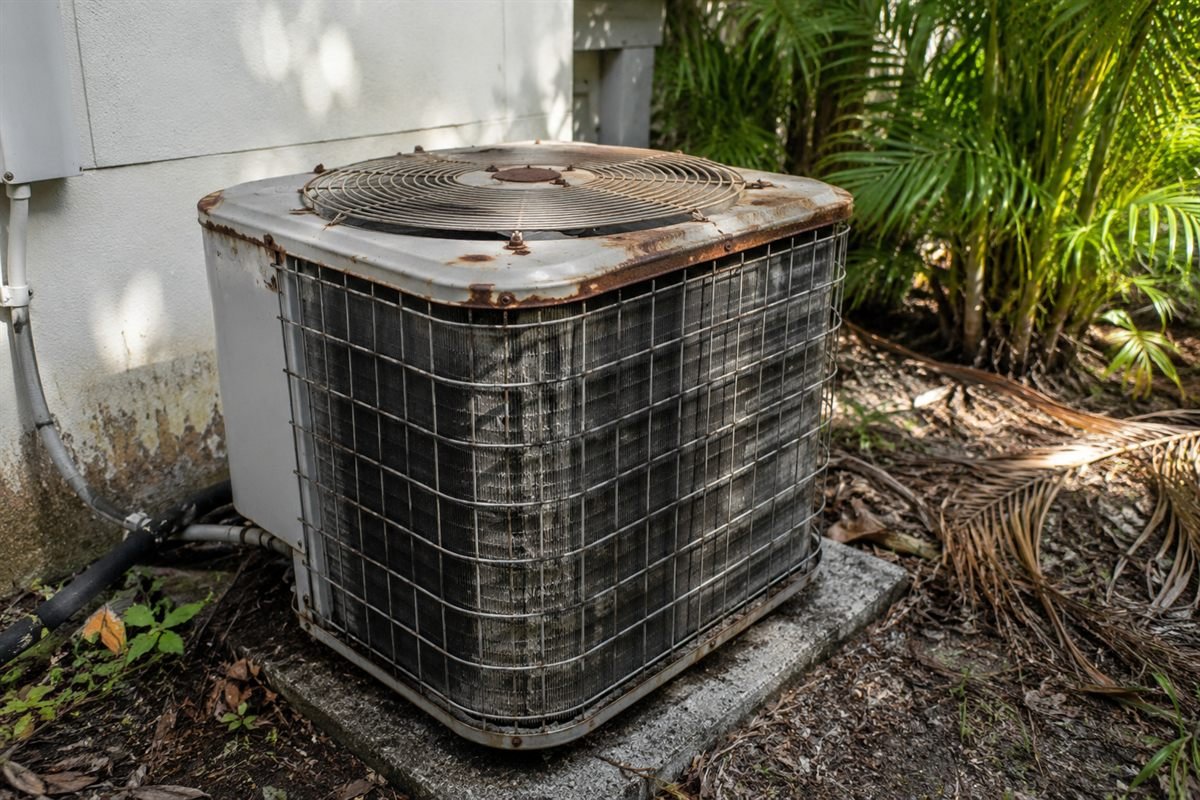
Walk outside and look at your condenser unit. There should be at least 2 feet of clearance on all sides for proper airflow. Clear away leaves, grass clippings, palm fronds, and any vegetation that's grown too close.
3. Visually inspect your indoor unit
Look at the air handler (usually in a closet, garage, or attic). You're looking for:
- Water leaks or water stains underneath
- Ice forming on the refrigerant lines
- Unusual smells (musty = mold, burning = electrical issue)
- Strange sounds when running
4. Listen for unusual noises
Florida AC systems get loud over time, but new noises are warning signs. Banging, screeching, hissing, or grinding sounds mean something needs attention. Learn what each AC sound means here.
Seasonal tasks (DIY — 30 minutes, twice a year)
Do these once before peak summer (April/May) and once before holiday season (October/November).
5. Clean the outdoor condenser coils
Your condenser sits outside, exposed to dirt, pollen, dust, and Florida's salt air (if you're coastal). Dirty coils kill efficiency.
- Turn off power to the unit at the breaker
- Use a garden hose (not a pressure washer — it'll bend the fins) to spray the coils from the inside out
- Let it dry completely before turning power back on
6. Clean the condensate drain line
Florida's humidity creates a LOT of condensation. That water drains through a PVC line — and if the line clogs (which happens often in our climate), water backs up and damages your home. This is one of the most common emergency calls we get during summer.
- Find the drain line (usually a white PVC pipe near your indoor unit)
- Pour 1 cup of distilled white vinegar into the access port (T-shaped fitting at the top)
- Repeat every 3 months in summer, every 6 months in cooler months
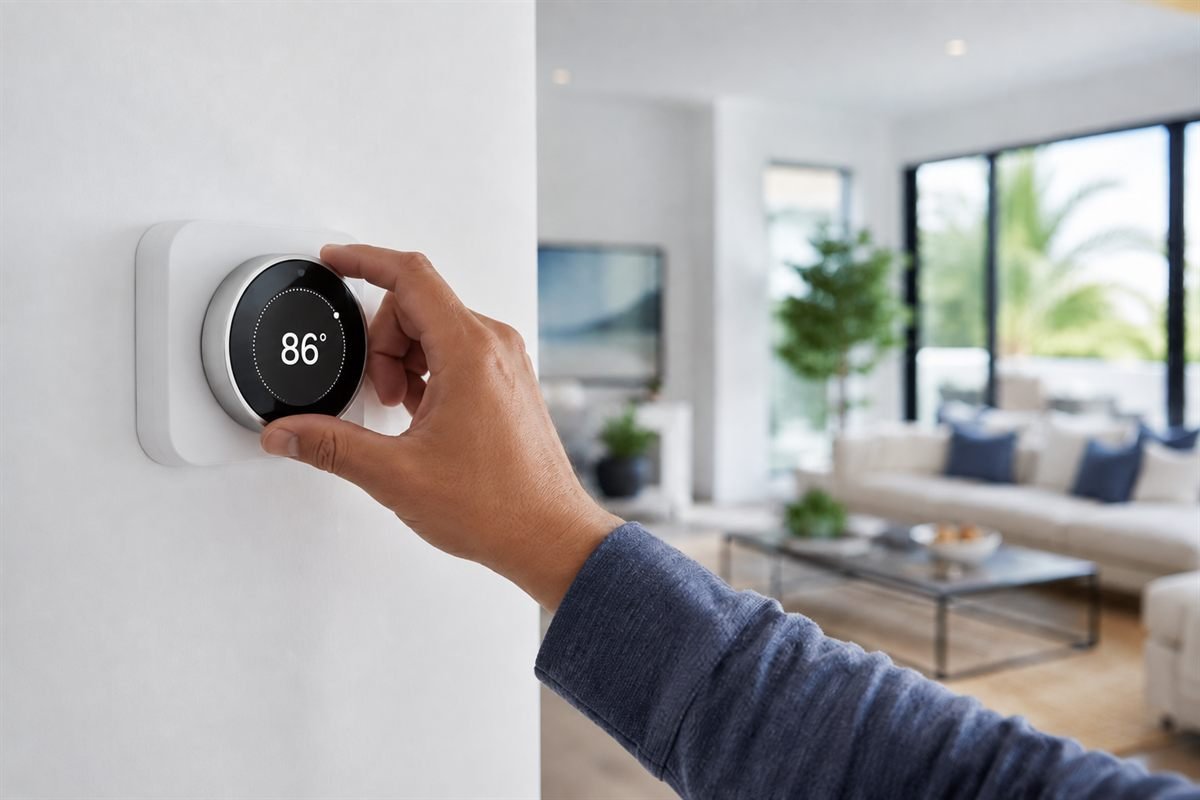
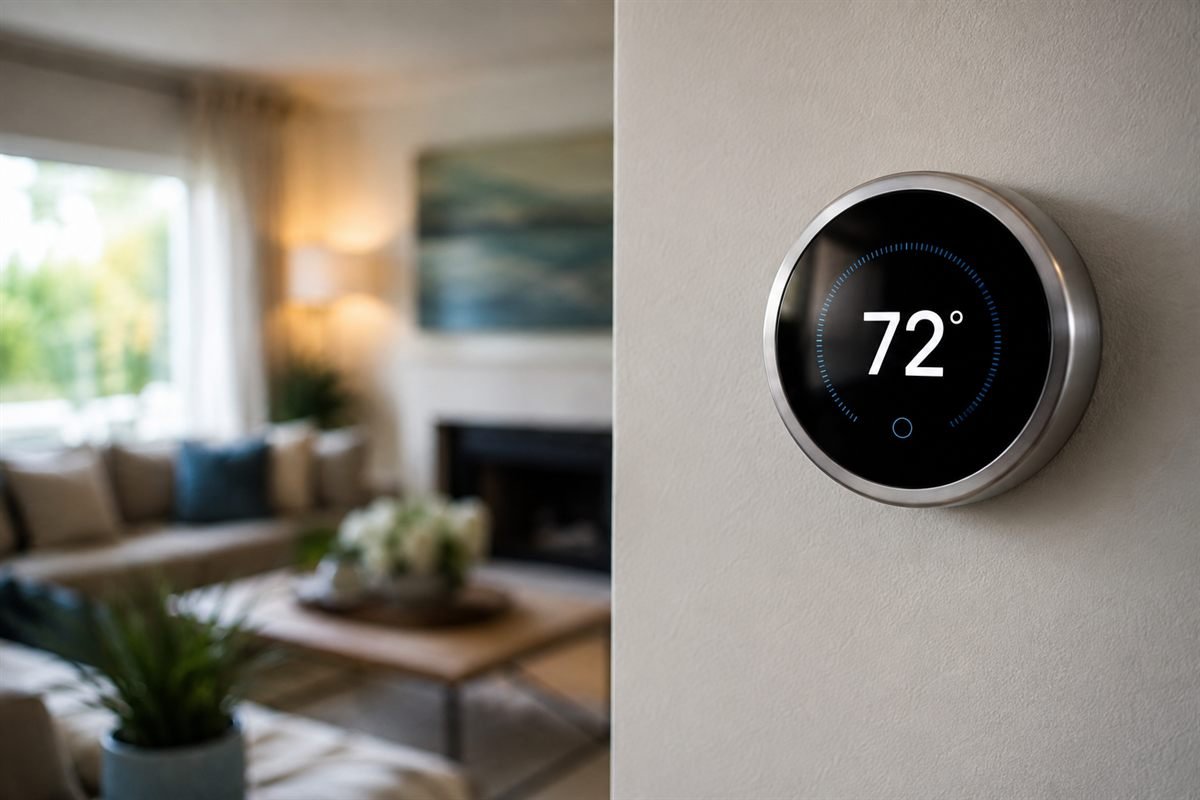
7. Test your thermostat
Set the temperature 5 degrees lower than current. Within 60 seconds, you should feel cool air at the vents. If not, the thermostat itself may be the issue — not your whole AC system.
Annual professional tasks (call us)
These are the tasks that need a licensed HVAC technician with proper tools and certification. Don't skip these — they're what catches problems before they become $3,000 emergencies.
8. Check refrigerant levels
Low refrigerant is the cause of most "AC running but not cooling" complaints. It almost always indicates a leak that needs to be found and sealed. Refrigerant work requires EPA certification — it's not a DIY task. With the new R-410A phase-out, this is more important than ever (read about the refrigerant changes here).
9. Inspect electrical components
Loose wiring, corroded contacts, and worn capacitors are responsible for a huge percentage of AC failures we see. A technician can spot these during a visual inspection — often months before they cause a breakdown.
10. Calibrate refrigerant charge and airflow
Even properly installed systems drift out of optimal performance over time. An annual tune-up checks refrigerant pressure, airflow CFM, and balance — restoring your system to peak efficiency.
11. Test safety controls
Modern AC systems have multiple safety controls (high-pressure cutoffs, low-pressure switches, freeze protection). These rarely fail visibly — but when they do, your system can be destroyed in minutes. We test these every visit.
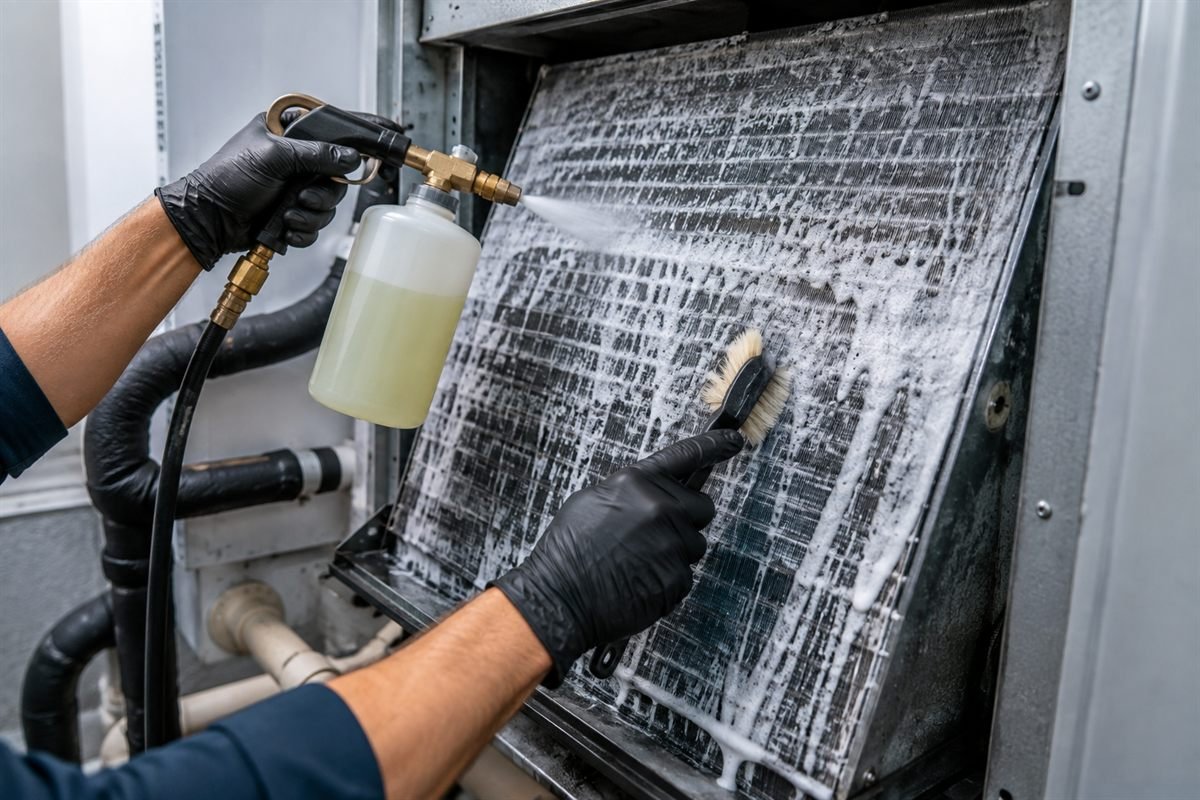
12. Clean evaporator coils
The indoor coils get coated with dust, mold, and biofilm — especially in Florida's humid climate. This kills cooling efficiency and creates indoor air quality problems. Professional cleaning requires proper equipment.
"In our experience, homeowners who follow this checklist consistently get 12-15 years out of their AC. The ones who skip maintenance? Most are calling us for replacement at year 7 or 8." — José Luis Bravo, Owner, ColdenHeat
Florida-specific maintenance notes
South Florida's climate creates challenges most maintenance guides don't address. Here's what makes our climate unique:
- Salt air (if you're coastal): Salt corrodes condenser coils up to 50% faster than inland air. Coastal homes need annual coil treatments and may benefit from coastal-rated equipment.
- Hurricane debris: After every storm, inspect your outdoor unit for damage and clear debris. See our hurricane prep guide.
- Year-round cooling: Florida AC systems run roughly 2,500-3,000 hours per year — vs. ~1,000 in northern climates. That accelerated wear means maintenance matters more here, not less.
- Humidity damage: Excess humidity creates mold, attracts pests, and causes water damage. Your AC's drain line is critical infrastructure in Florida.
The bottom line
The cheapest repair is the one you never need. Spending 30 minutes a month on basic maintenance — and a couple hundred dollars a year on professional service — can extend your AC's life by 5-7 years and prevent thousands in emergency repairs.
If you'd rather not deal with any of this yourself, our maintenance plans include all of the above (plus written reports after every visit and priority emergency response). Either way: don't skip the maintenance. Your AC is worth too much to neglect.
Need help with your AC system?
ColdenHeat is here for South Florida homes and businesses — same-day service, free estimates, no surprises.
🌐Español Get Free Estimate →Same-day AC service for homes and businesses across Broward and Miami-Dade — Weston, Davie, Plantation, Pembroke Pines, Fort Lauderdale, Hollywood, Coral Springs, Miami and Boca Raton, Doral, Kendall, Sunrise, Pompano Beach.