Hurricane season runs June through November in South Florida. Your outdoor AC unit is one of the most exposed and expensive pieces of equipment on your property. The right preparation can save your $5,000+ system from being destroyed in a single storm. Here's what to do before, during, and after a hurricane — plus what NOT to do (which is where most homeowners go wrong).
If you live in South Florida, hurricane season is part of life. Your AC system is one of the largest investments on your property — and one of the most exposed when storms hit.
The good news: most AC damage during hurricanes is preventable with proper prep. Here's what we tell every customer.
Before the season starts (May)
The work you do in May determines how well your system survives in August.
1. Get a pre-season tune-up
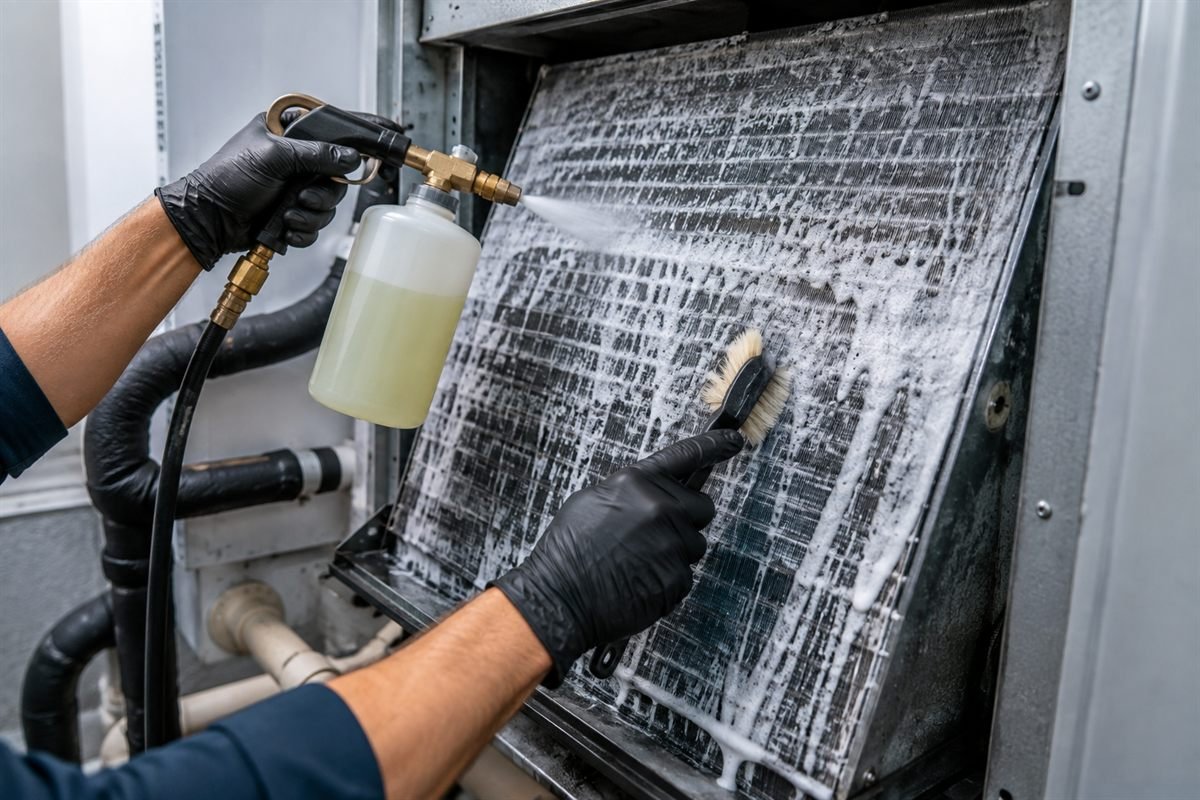
A system in peak operating condition handles power surges and stress better than one that's already struggling. Signs of trouble (low refrigerant, weak capacitor, dirty coils) get amplified during storm conditions. This is not the year to skip your annual service.
2. Inspect the surroundings of your outdoor unit
Walk around your condenser and look for:
- Loose objects within 50 feet (lawn furniture, planters, pool equipment, kids' toys) — these become projectiles in a hurricane
- Trees with weak limbs overhanging the unit
- Loose roof tiles, fence panels, or siding nearby
- Drainage issues — areas where water pools near the unit
3. Verify your unit is properly secured
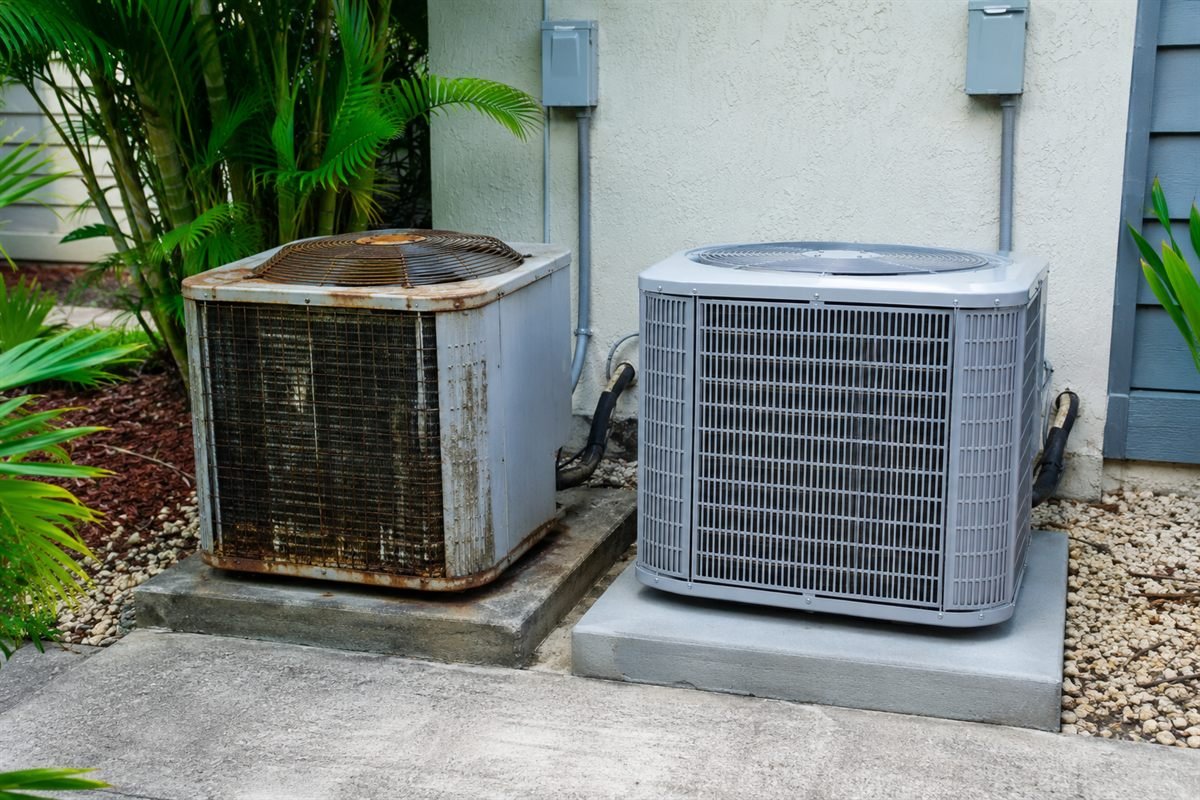
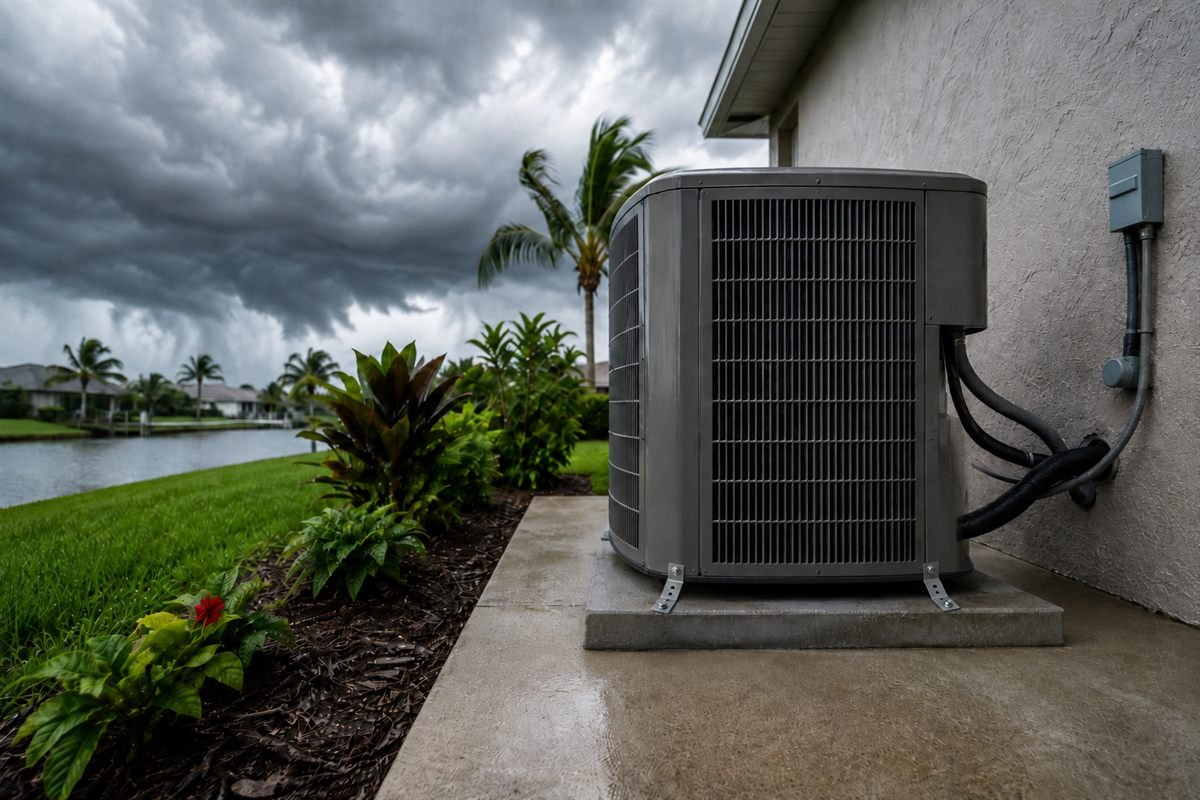
Florida code requires AC condensers to be anchored to the ground. After 10+ years, those anchors can corrode or loosen. Check that your unit is solidly attached — it shouldn't wobble when you push it firmly. If it does, the anchoring needs reinforcement.
4. Document your system for insurance
Take photos of your AC unit (both indoor and outdoor) from multiple angles. Note the model and serial number. Save copies in your phone, email, and cloud storage. If a storm damages or destroys your AC, you'll need this documentation for insurance claims.
When a storm is approaching (24-48 hours out)
5. Clear everything around the unit
Move all loose objects, even ones you think won't matter. Hurricane winds turn potted plants into 100mph projectiles. Bring everything indoors or into a secured space.
6. Trim trees and remove obvious hazards
If there's time, trim back tree limbs that hang directly over your unit. If the storm is very close, skip this — your safety matters more.
7. Cover or protect the unit (with caveats)
This is where most people go wrong. The right way to protect your AC is more nuanced than just covering it.
For Category 1-2 hurricanes / tropical storms:
- You generally do NOT need to cover the unit
- Modern AC condensers are weather-rated
- Covering can trap moisture and cause more damage than the storm would
For Category 3+ hurricanes:
- Consider a hurricane-rated AC cover (purpose-built, not a tarp)
- Plywood "boxing" can work but must allow drainage
- Never use plastic sheeting alone — it traps moisture
- Remove any cover within 24 hours of storm passing
During the storm
8. Turn off your AC at the breaker
This is critical. The biggest threat to your AC during a hurricane isn't wind — it's power surges.
When power flickers off and on (which happens constantly during storms), it sends electrical surges through your AC's sensitive components. The compressor, control board, and capacitor can all be damaged.
Steps:
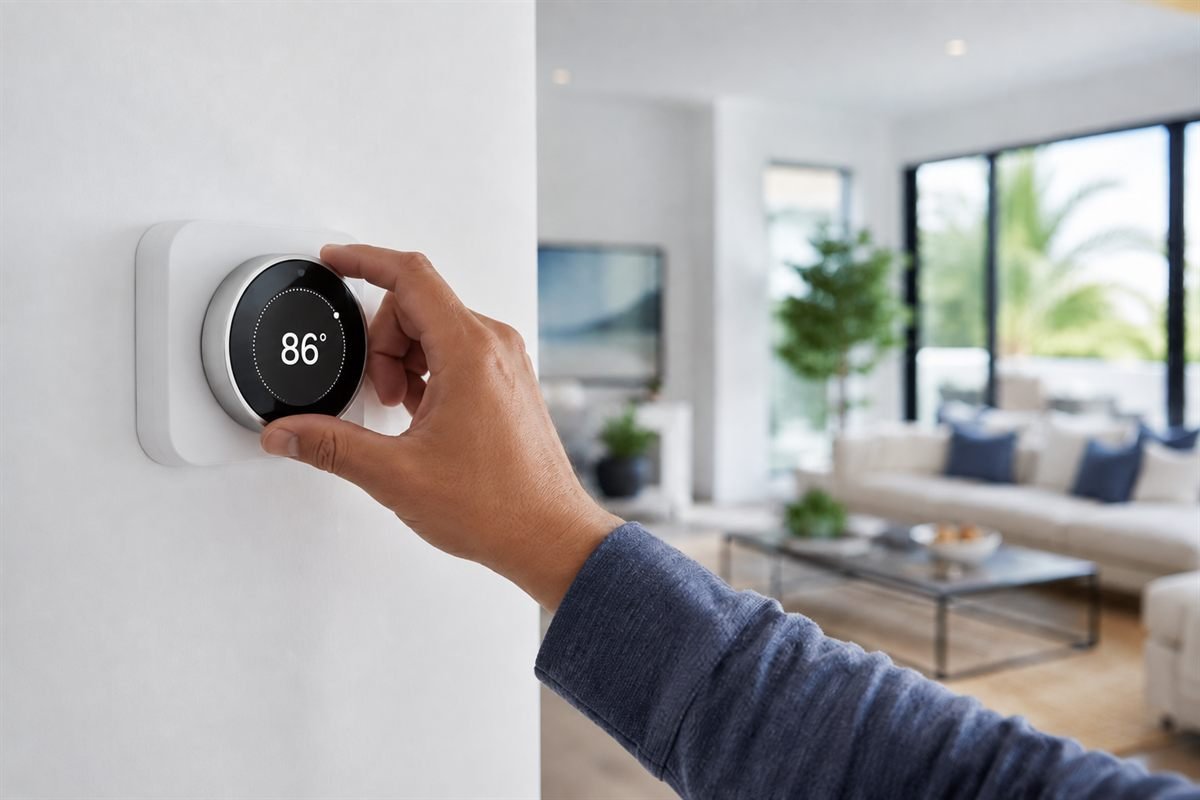
- Turn the thermostat to "off" before the storm starts
- Turn off the AC breaker at your electrical panel
- Leave it off for the duration of the storm AND aftermath
9. Do NOT run the AC during the storm
Even if power is on, don't run the system. The risk of surge damage is too high.
After the storm
10. Wait for stable power
After the storm passes, power is often restored briefly, then lost again. Don't turn your AC back on until power has been stable for several hours. Turning it on during unstable power is asking for surge damage.
11. Inspect before turning on
Before flipping the breaker back on, inspect:
- Visible damage to the outdoor unit — bent fins, missing panels, debris stuck inside
- Standing water around or under the unit
- Refrigerant lines — kinks, cuts, or visible leaks
- Indoor unit for water damage or unusual smells
12. If you see damage, don't turn it on
Running a damaged AC creates much more expensive repairs. If anything looks wrong, leave the breaker off and call us. An inspection is free; a destroyed compressor isn't.
13. Once you turn it on, listen carefully
If everything looks fine, turn the breaker back on, set your thermostat normally, and listen. New sounds (banging, hissing, screeching) mean call for service. (See our AC noise guide.)
14. Document any damage immediately
If your unit was damaged, photograph everything before any work is done. File insurance claims promptly — adjusters are overwhelmed after major storms and earlier filers get faster service.
The biggest mistakes we see
Running the AC during the storm
"Just to keep the house cool until the power goes out." This is the #1 cause of post-storm AC damage. Turn it off well before the storm hits.
Wrapping the unit in plastic
Tarps and plastic sheeting trap moisture against the unit. After the storm, you have a damp environment perfect for corrosion and electrical damage.
Trying DIY post-storm repairs
If your AC is damaged, don't try to fix it yourself. Anything involving refrigerant, electrical work, or compressor diagnostics needs a licensed technician. DIY attempts often turn $500 repairs into $3,000 ones.
Ignoring small post-storm issues
"It's still cooling, so it must be fine." A storm-damaged AC may run for weeks before the damage becomes terminal. If anything seems off after a storm, get it inspected.
Whole-home surge protection
If you live in South Florida, a whole-home surge protector at your electrical panel is one of the smartest investments you can make. They typically cost $300-500 installed and protect not just your AC but your entire home's electronics.
Combined with the storm-prep steps above, this dramatically reduces your risk during hurricane season.
Most of the storm damage we see could have been prevented by turning off the breaker. That single step would save Florida homeowners millions every hurricane season.
Need a pre-season check?
We offer pre-hurricane AC tune-ups every spring. We inspect anchoring, electrical components, and overall system health — getting your AC ready for storm season. Schedule a pre-season service or call (754) 308-9831.
Need help with your AC system?
ColdenHeat is here for South Florida homes and businesses — same-day service, free estimates, no surprises.
🌐Español Get Free Estimate →Same-day AC service for homes and businesses across Broward and Miami-Dade — Weston, Davie, Plantation, Pembroke Pines, Fort Lauderdale, Hollywood, Coral Springs, Miami and Boca Raton, Doral, Kendall, Sunrise, Pompano Beach.